Foreword from the Managing Director

Founding Partner & Managing Director
Africa’s economic future depends on how effectively capital aligns with existing sources of value. Across the continent, women play a central role in consumption, enterprise formation, and community resilience, yet their contribution remains systematically undercapitalized within formal investment and trade systems.
Women influence the majority of household purchasing decisions, dominate informal and micro-enterprise activity, and establish businesses at rates that exceed global averages. Despite this, women led enterprises continue to face structural barriers to finance, market access, and investment visibility. This imbalance is not a question of capability or ambition but a persistent capital allocation gap that constrains economic growth.
At Pan African Business Hub, we view this gap as a strategic opportunity. Evidence consistently shows that when capital aligns with women’s leadership and participation, markets expand, productivity strengthens, and economic systems become more resilient. Through our Gender Lens Investment & Trade Facilitation Strategy, we are committed to redirecting capital toward high-performing yet overlooked segments of Africa’s economy, unlocking scalable growth that delivers both financial returns and measurable impact.
Executive Summary
Women are among the most powerful economic actors in Africa today, yet they remain one of the most underfunded.
They influence over 70% of household consumption decisions, drive more than USD 1 trillion in informal economic activity, and lead enterprises at rates significantly higher than global averages.
At the same time, women-led businesses receive less than 1% of venture capital across the continent. This disparity is not a reflection of risk or capability; it is a structural capital allocation gap.
Global evidence from McKinsey, BCG, IFC, ILO, and UN Women consistently demonstrates that women-led and gender-diverse enterprises outperform on revenue generation, capital efficiency, profitability, and long-term resilience. Gender lens investing is therefore not a social concession; it is a proven strategy for superior returns and sustainable growth.
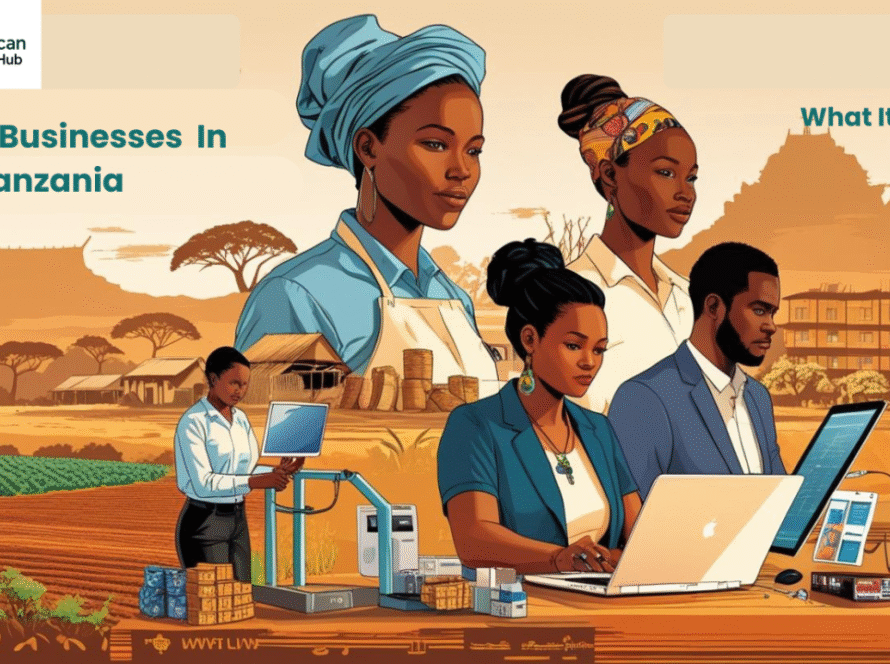
Tanzania exemplifies both the scale of this opportunity and the cost of inaction. Women represent over 51% of the population, dominate agriculture and informal trade, and sustain the majority of micro- and small enterprises. Yet fewer than 15% of women-owned MSMEs have access to formal credit or investment capital.
The resulting financing gap represents a significant drag on national productivity and a clear entry point for high-impact, inclusive investment.
Pan African Business Hub’s Gender Lens Investment & Trade Facilitation Strategy is designed to address this gap directly.
Our approach integrates:
1. Capital pathways for women-led enterprises
2. Regional and Pan-African trade facilitation
3. Policy advocacy for gender-responsive investment frameworks
4. Impact measurement aligned with UN SDGs 5, 8, 9, and 10
Through this framework, PABH positions women not as beneficiaries of
growth, but as its primary drivers, strengthening portfolios, expanding markets, and building resilient economies.
Our objective is clear:
“To catalyze Africa’s next trillion-dollar growth wave by investing where women lead.”
Read more -> http://panafricanbusinesshub.co.tz/wp-content/uploads/2026/01/pabh-2025-Overview_-Gender-Lens-Investment-Strategy.pdf